
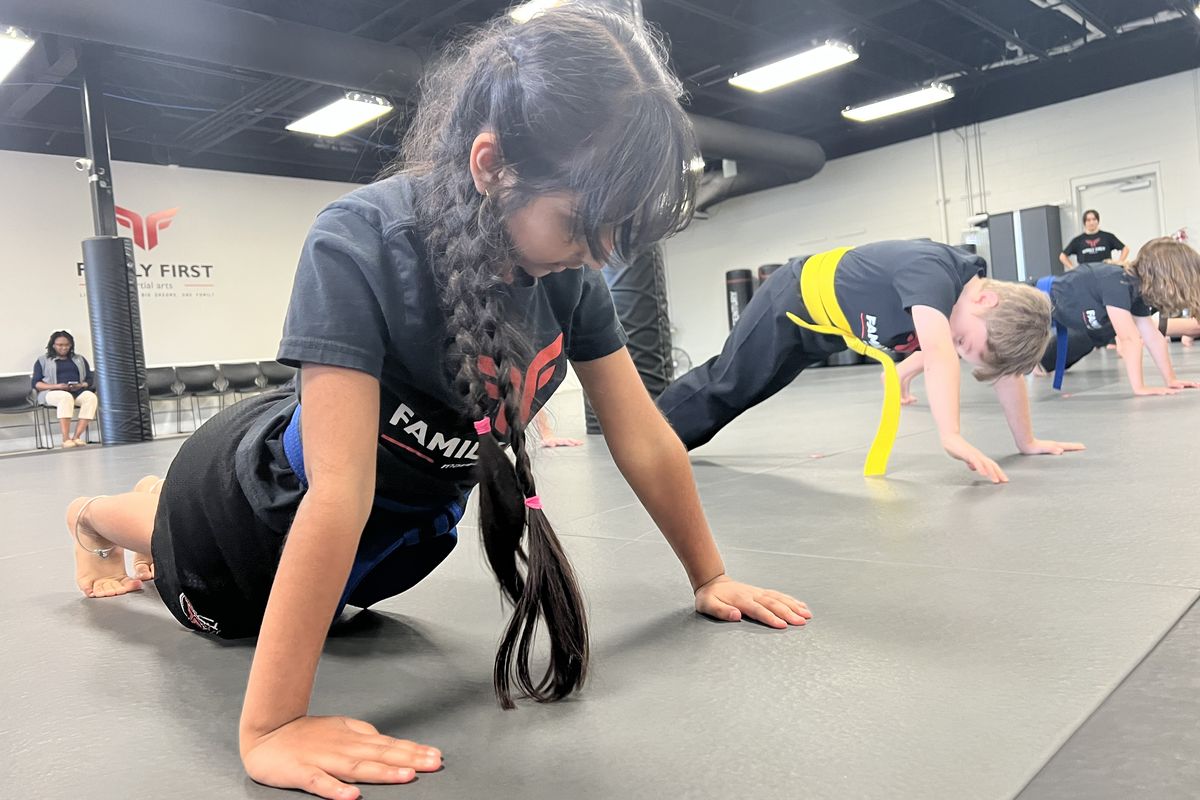
Every fall, a parent tells me their child is dropping martial arts for soccer season, and every fall I tell them the same thing: I understand, and also, you may have it backwards. Martial arts is the training that makes the soccer season better. After four decades of watching kids grow up on the mat, here's the case.
Athleticism starts with body control
Before a child can be fast or strong, they have to know where their body is in space. Martial arts is the most concentrated body-control training a young athlete can get. Every class is balance work on one leg, rotation through the hips, coordination between left and right, and controlled falling. Those are the raw materials of every sport your child will ever try, from gymnastics to football.
Cross-body movement builds the whole athlete
Martial arts constantly asks the body to work across its centerline: right hand with left foot, turning the hips one way while the shoulders finish another. Young athletes who train this way develop both sides of their body instead of over-relying on their dominant side, which is exactly what single-sport kids tend to miss.
The mental game is the hidden curriculum
Ask any coach in any sport what they wish kids arrived with, and the answers are rarely physical. They want kids who listen the first time, keep trying after failing in front of others, and handle a correction without wilting. That is precisely what a martial arts class trains, rep after rep. A child who has stood alone at a belt test doesn't fall apart over a missed free throw.
Coaches don't just inherit our students' kicks. They inherit their coachability.
It protects against burnout and overuse
Early single-sport specialization is one of the quiet problems in youth athletics: the same joints doing the same motion year-round, and the fun draining out by age twelve. Martial arts pairs beautifully with seasonal sports because it varies the movement, keeps training playful, and gives kids an identity that doesn't ride on one team's season. Our two-days-a-week model, with flexible class times, was designed so kids can do both.
Confidence transfers everywhere
The shy kid who finds their voice saying "yes sir" with a straight back brings that same posture to the batter's box, the classroom, and eventually the job interview. Sports build skills. Martial arts builds the kid who uses them.
The practical play for sports families
You don't need to choose. Keep martial arts as the year-round base at two classes a week, and layer seasonal sports on top. The two classes can move around game schedules, which is exactly why we built the schedule that way. Start with a free trial class and see how it fits your family's season.